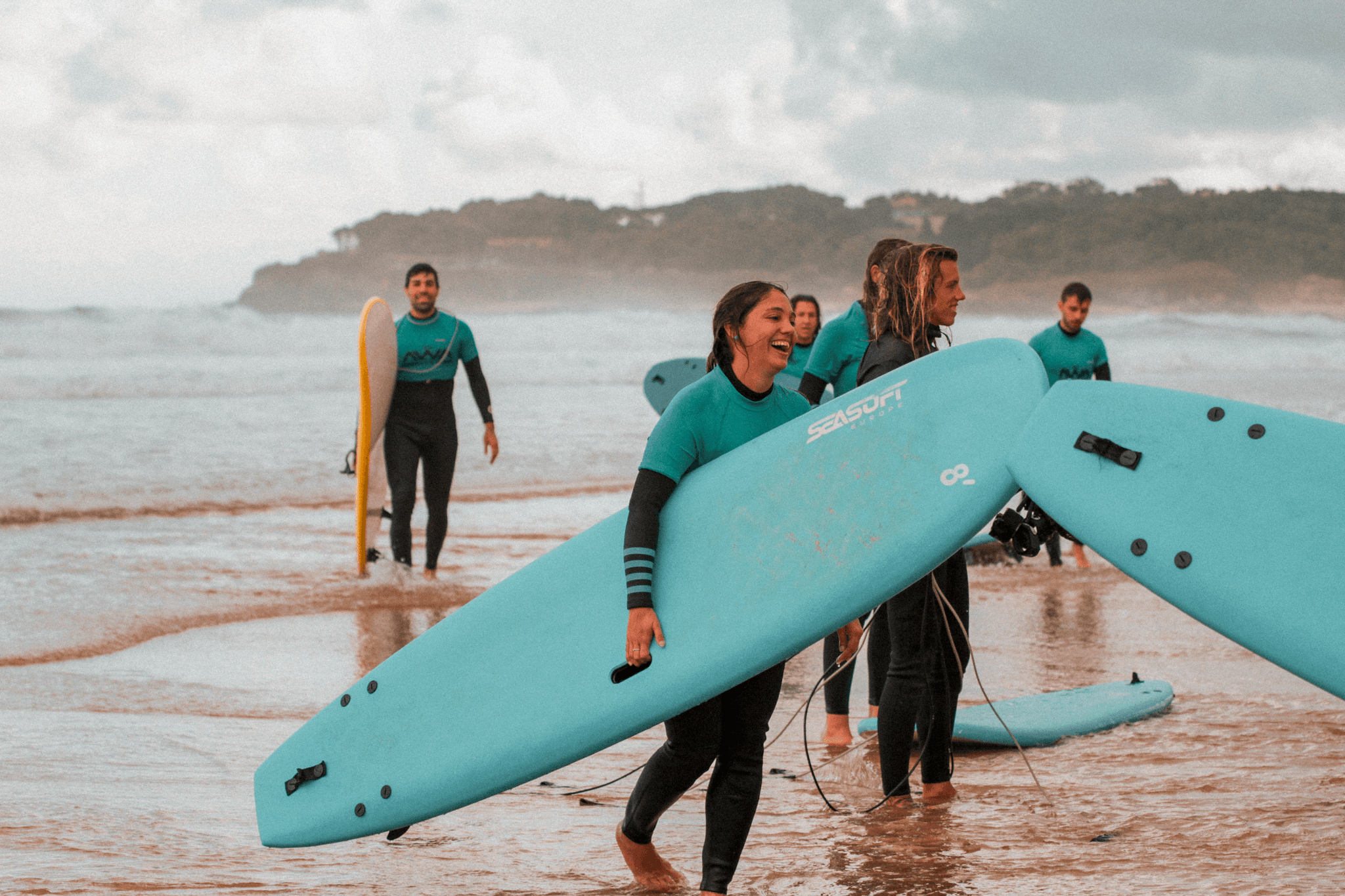
Autumn Surfing: Where to Go (and Why It's the Best Season of All)
Autumn surfing at its finest: Morocco, Portugal, the Canaries, and Northern Spain peak between September and November. Fewer crowds, better prices, and Atlantic swells that leave summer in the dust.
Quick info
Andrea Carrara
May 18, 2026
6 min read
The best destinations for autumn surf are Morocco, Portugal, the Canary Islands, and Northern Spain. Each has its own sweet spot: Morocco and the Canaries peak from October to November, while Portugal fires up as early as September. Mexico (Oaxaca) is the go-to alternative for those looking to step outside the Atlantic.
Autumn Surf: Where to Go (and Why It's the Best Season of All)
September. The beaches clear out, prices drop, and the waves come back. If you've been surfing for a while, you already know what we're talking about:autumn is the most underrated season of the year — and the smartest time to plan a surf trip.
Europe's and North Africa's top surf destinations hit their stride between September and November. Atlantic swells build in strength, the wind settles, flight prices drop, and surfhouses still have availability without needing to book six months out.
Why Autumn Is the Best Season for Surfing
Before diving into specific destinations, it's worth understanding why autumn works so well for surf.
In summer, Atlantic high-pressure systems block storm tracks. Waves arrive, but they're often short, disorganised, and crowded. Come September, Atlantic lows start spinning again, generating longer, more powerful, and — above all — more consistent swell.
The result: better surf, less-crowded spots, and surfhouses that can still offer flexibility on dates.In practical terms: better waves for less money. It's hard to argue against autumn.
The Best Destinations for Autumn Surfing
Morocco: The Foolproof Choice for October and November
Morocco is probably the most popular autumn destination among European surfers — and for good reason. The Atlantic coastline between Taghazout and Imsouane starts picking up consistent swell by late September, with October and November marking the true seasonal peak.
What to expect: waves between 1.5 and 3 metres, offshore winds in the morning, still-warm water (20–22°C), and a 3/2 wetsuit is plenty. Anchor Point works best for intermediate to advanced surfers; Imsouane Bay is more accessible for those still building their skills.
Why go in autumn and not earlier: in summer, onshore winds make the waves barely surfable for most of the day. From October onwards, the whole picture flips.
Portugal: Waves From September at Peniche and the Algarve
Portugal is arguably Europe's most versatile surf destination, and autumn is its golden season. Peniche — home of the Rip Curl Pro and one of the most famous spots in the world — picks up regular swell as early as September, with excellent conditions holding through December.
What to expect: waves of 2 to 4 metres on solid swell days, variable but predictable wind, water around 18–19°C in September dropping to around 16°C by November. A 3/2 in September, a 4/3 recommended from October.
The Algarve, in the south, offers more sheltered and manageable conditions for intermediate surfers, with spots like Arrifana and Bordeira performing well even in northerly winds.
Worth noting: Portugal is one of the best-connected destinations for low-cost flights, with Lisbon and Faro served year-round. That brings the total cost of the trip down considerably.
Canary Islands: Guaranteed Waves Even in November.
The Canary Islands have one major advantage over every other destination: seasonality is almost irrelevant. Fuerteventura and Lanzarote receive North Atlantic swell year-round, but autumn is when the waves become more consistent and the wind locks into the right directions.
What to expect: waves between 1 and 3 metres depending on the island and spot, reliably mild air temperatures (24–26°C), water at 22–23°C even in November. No heavy wetsuit needed.
Fuerteventura is ideal for intermediate and advanced surfers, with spots like Lobos and El Cotillo. Lanzarote has more technical breaks like La Santa and Famara, suited to those already comfortable with Atlantic waves. Las Palmas de Gran Canaria is an urban alternative, with a quality break right in the heart of the city.
For those who refuse to give up the warmth: the Canaries in autumn are the only Atlantic destination where you can surf in the morning and spend the rest of the day in a t-shirt without a second thought.
Find our curated surfhouses in the Canary Islands on Surfhouse.world
Northern Spain (Cantabria): Stay in Europe Without Sacrificing the Waves.
Somo, in Cantabria, is a progression-friendly spot with one of the longest beaches on Spain's northern coast. It doesn't match Portugal or Morocco for raw power, but autumn brings regular swell and ideal conditions for intermediate surfers looking for a manageable surf trip — including as a first time surfing abroad.
What to expect: waves between 1 and 2 metres on most autumn days, often westerly winds, water at 18–20°C in September dropping to around 15°C by November. A 3/2 from September, a 4/3 from October.
Logistics bonus: reachable by car from Italy through France, or by direct flight to Santander or Bilbao. One of the most accessible options for a first European surf trip.
There's no one-size-fits-all answer. It comes down to your level, when you want to go, and what your budget looks like.
If you're intermediate to advanced and want the best waves: Morocco in October or Portugal from September. If you want guaranteed warm weather even in November: the Canaries, no question. If you want to keep costs low and are taking your first steps in surf travel: Cantabria is the most accessible choice.
All these destinations share one thing in common: in autumn, they have more to offer than in summer — with fewer people in the water and sharper prices. Whether you're planning your first surf trip or your tenth, there's very little to hold you back this season.
FAQ
Other articles
Winter Surfing: the Best Destinations (and How to Pick the Right One)
The best winter surf destinations: Canary Islands (consistent waves, short flight), Sri Lanka (December–March, all levels), Indonesia (Mentawai and Bali, advanced surfers), South Africa (Jeffrey's Bay, iconic breaks), and Nicaragua (Popoyo, uncrowded lineups)
Surf This Summer: The Beginner's Guide to Getting Started (and Getting It Right)
Summer surf for beginners: top destinations include the Canaries (Las Palmas, Lajares, Adeje), Northern Portugal (Figueira da Foz, Estela Porto), France (Vieux Boucau), and Australia (Arrawarra NSW, austral winter).
DIY surf trip: the practical guide to planning it efficiently
A DIY surf trip comes together in five steps: pick the right destination for the season and your level, book your flight 6–10 weeks out, find a verified surfhouse close to the breaks, sort your gear before you leave, and read the forecasts on Windguru or Surf-Forecast
Surf camp vs surfhouse: the differences nobody clearly explains
Surfhouses and surf camps are different formats — neither is better than the other. A surfhouse is an independent base for surfers who already ride, close to the spots and with a built-in surf community. A surf camp offers structure, instructors, and guided progression, even for intermediate and advanced surfers.